 Panacea Bio Chem
In 1966 the geneticist Stanley Gartler stood up at a conference and told a room of cell biologists that eighteen of their supposedly distinct human cell lines were, in fact, all the same cell — HeLa4, the aggressive cervical-cancer line taken from Henrietta Lacks in 1951. Over the following years Walter Nelson-Rees catalogued more and more "unique" lines that were secretly HeLa, spread by nothing more exotic than a splash of contaminated medium and an over-vigorous cell. Decades of experiments had been run on the wrong cells. The episode is why STR authentication is now a routine identity check, and why an international committee maintains a public register of misidentified lines. Purity, it turned out, begins with knowing which cell you are holding — the humblest and most-skipped question in the whole field.
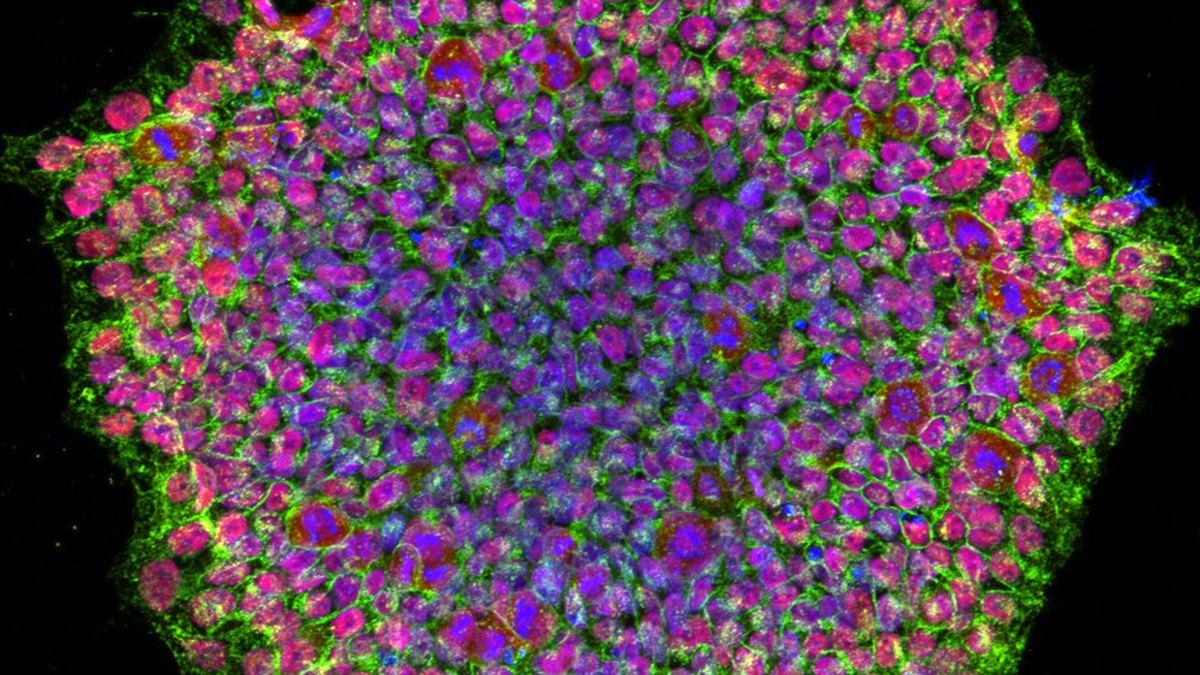
Stem-cell purity is not a single number but a description: how closely a cell preparation matches its intended identity, how free it is of unwanted cells and contaminants, and how stable its genome and function are. It is established by characterisation — surface-marker phenotyping by flow cytometry (SSEA, TRA and CD markers), karyotype, cell-line authentication by STR profiling, sterility and mycoplasma testing, and a potency assay. This brief walks from what those terms mean, through the identity traps that have caught whole fields, to the frontier of making consistent, well-characterised cell products at scale — where the cryopreservation step decides how much of that carefully verified quality survives the freezer.
1. What "stem-cell purity" actually means
Ask what makes a chemical pure and the answer is simple: one molecule, no others. Cells are harder. A stem-cell preparation is a living population, and "purity" folds together several distinct questions — identity (are these the cells we think they are?), homogeneity (is the population one thing, or a mix?), genomic integrity (has the genome drifted in culture?), sterility (is it free of bacteria, fungi, mycoplasma and endotoxin?) and potency (do the cells still do what they are meant to do?). A preparation can be sterile yet mis-identified, or correctly identified yet carrying an abnormal karyotype. Each question needs its own measurement.
Stem cells1 add a further wrinkle. Their defining properties — self-renewal and the ability to become other cell types — are the same properties that make them drift: long culture selects for faster-growing variants, and differentiation can begin quietly at the colony edges. Purity for a stem cell therefore includes how pluripotent or how committed the cells are, not just what species and line they belong to.
2. The characterisation toolkit
Characterisation is how identity and quality are turned from an assumption into a measured record. A modern cell-product panel combines several orthogonal methods, each answering a different question:
| Attribute | Method | What it reads |
|---|---|---|
| Identity / phenotype | Flow cytometry2 & immunostaining | Surface & intracellular markers — SSEA-3/4, TRA-1-60/81, OCT4 for pluripotency; CD panels for lineage |
| Line authenticity | STR profiling3 | A short-tandem-repeat "fingerprint" confirming the cells are the declared line and not a cross-contaminant |
| Genomic integrity | Karyotype — G-banding / array | Chromosome number & structure; acquired abnormalities from extended culture |
| Sterility | Culture, mycoplasma & endotoxin tests | Bacterial, fungal, mycoplasma and pyrogen contamination |
| Potency | Function-linked assay | A measurable readout tied to the cells' intended biological action |
The phenotyping markers are worth a closer look, because they are what most people mean by "purity" in practice. In flow cytometry, cells flow single-file past a laser; fluorescent antibodies bound to surface proteins light up, and the instrument counts how many cells carry each marker. A pluripotent line is expected to be strongly positive for markers such as SSEA-4 and TRA-1-60 and negative for early differentiation markers; a mesenchymal stromal population is defined by a positive CD73/CD90/CD105 signature and the absence of haematopoietic markers. The percentage of cells matching the expected pattern is the purity figure that a release record reports.
3. Why it matters — the open frontier
For research, a mis-characterised culture wastes time. For a cell product — cells grown to be administered to a person — identity, homogeneity and function are the product. The ambition of the field is consistent, well-characterised cell products made at scale: banks of pluripotent or engineered cells with a stable phenotype, expanded under controlled conditions, each batch matching the last. That is a manufacturing problem as much as a biological one, which is why cell products are increasingly made under GMP-style controls, with characterisation built into every step rather than bolted on at the end.
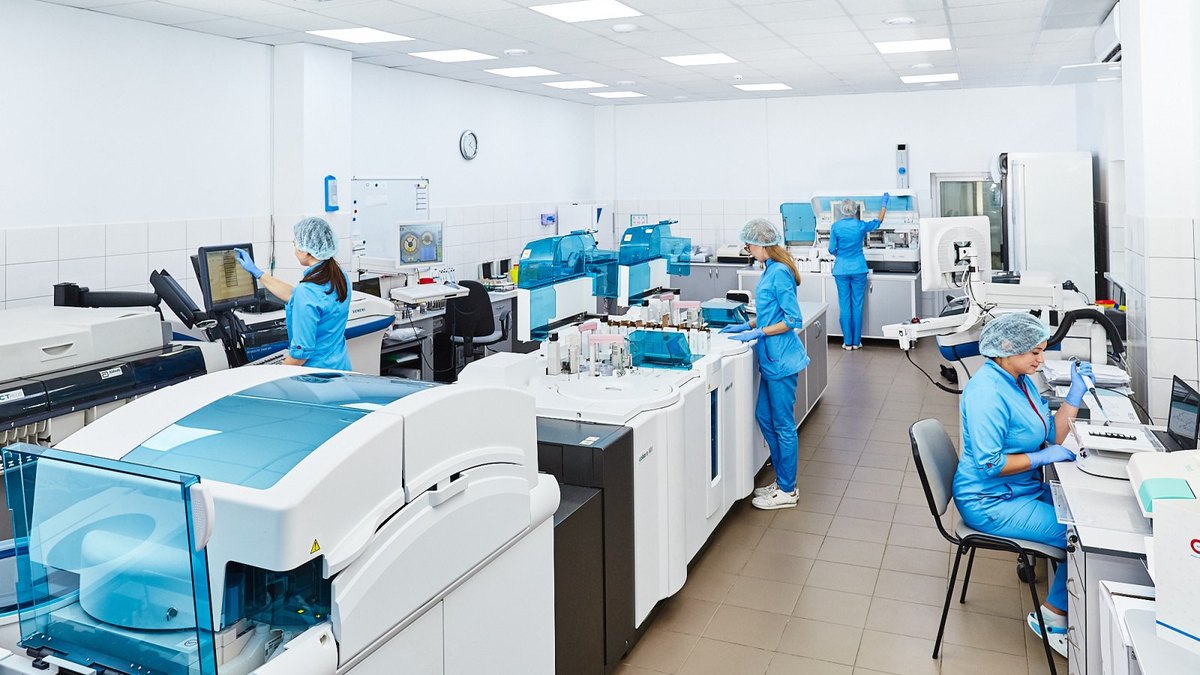
One step sits stubbornly across the whole ambition: getting the cells there. Cells are banked and shipped frozen, and freezing is where a great deal of carefully verified quality can quietly be lost. Ice does not form politely — left to itself it nucleates at random, and jagged intracellular crystals rupture membranes. Cryoprotectants such as DMSO blunt the damage but add their own stress, and the same violence returns on thaw. A batch that passed every purity check while alive can arrive with lower viability and a shifted phenotype. How cells are frozen, stored and thawed is therefore part of the product's identity, not an afterthought — and controlling the moment of ice formation is one of the most active frontiers in biopreservation.
4. Where Panacea Bio Chem works
Panacea Bio Chem researches the preservation and controlled handling of fragile biological material — the last, unglamorous mile in which a well-characterised sample has to survive freezing, storage and reconstitution with its identity intact. The group's direction points at the moment of freezing itself: rather than letting ice nucleate at random, its work explores controlled, deterministic nucleation and gentle, sensor-led handling, so the physical process that most threatens a cell's measured phenotype is directed rather than left to chance. The same preservation thinking runs through its drying and stabilisation technologies — Cryolapse™, gentle low-temperature sublimation, TgShift™, which lifts the glass-transition ceiling of the protective matrix, LyoLevit™, containerless drying, and RedoxVault™, isolation from oxygen and metals — each orchestrated by the S3Pulse™ biointegrity algorithm.
The exact thermal choreography, nucleation timing, sequences and hardware that make this controlled preservation repeatable remain proprietary to Panacea Bio Chem and are held by Bogdan Dicoias. The outline is here; the recipe stays behind the door.
5. Application fields
Where does purity-first, preservation-aware cell science hit hardest? A few directions stand out — equally as fields of use and as inspiration for future research and trials:
- Off-the-shelf allogeneic cell banks — master and working cell banks of induced-pluripotent or engineered lines, where every vial must thaw to the same characterised phenotype for the model to work.
- Engineered immune-cell products — identity, homogeneity and viable recovery after freezing are release-defining for cell therapies; the frozen-to-bedside journey is where quality is won or lost.
- Regenerative and organoid research — multipotent stromal cells and 3-D tissue models whose downstream behaviour depends on a stable, verified starting population.
- Biobanking & distributed sourcing — non-invasively sourced cells such as urine-derived stem cells and rare populations like Muse cells, where the value of a hard-won sample rides entirely on preserving it intact.
- Potency-linked release testing — tying a functional assay to the characterisation record, so "purity" means capable of its intended action, not merely correctly labelled.
Authenticating your own cell line — the practical path
The identity trap is not only history. Misidentified and cross-contaminated lines remain in circulation, and the International Cell Line Authentication Committee (ICLAC) maintains a public register of them9. For a researcher holding a vial, authentication is a concrete routine rather than a principle:
- Profile the line. Commission short-tandem-repeat (STR) profiling from a service laboratory — the standardised fingerprint from the toolkit table above, formalised as the field's authentication method by Barallon and colleagues3.
- Compare against a reference. Match the profile against the reference STR databases that the major public cell repositories (such as ATCC and ECACC) publish for their lines.
- Check the register. Look the line up in the ICLAC register of misidentified and cross-contaminated lines before building experiments on it9.
- Keep the evidence with the batch. File the STR report alongside the batch record; journals and funders increasingly ask for an authentication statement.
Two honest limits. STR profiling answers which line this is — it says nothing about phenotype, potency, or drift within an authentic line, which is why it sits beside flow cytometry and karyotype rather than replacing them. And a percentage-purity readout is only as meaningful as the gating strategy behind it: the same sample can yield different figures under different gates, so a purity number belongs on the record together with the method that produced it. ICLAC register link last checked 2026-09-10.
Anatomy of a characterisation record
What does the end product of all this measurement look like? A characterisation record — the document that accompanies a banked or released cell preparation — answers the five purity questions line by line. The example below is fictional and illustrative: it shows the shape of a record, not data from any real product.
| Record line | Illustrative entry | What it establishes |
|---|---|---|
| Identity (authentication) | STR profile matches the reference; line absent from the ICLAC register | The cells are the declared line, not a cross-contaminant |
| Phenotype / homogeneity | 96% CD73/CD90/CD105-positive, negative for CD34, CD45 and HLA-DR — gating strategy stated7 | The population matches the ISCT minimal-criteria signature for mesenchymal stromal cells |
| Genomic integrity | Normal karyotype (G-banding), passage 12 | No acquired chromosomal abnormality at this passage |
| Sterility panel | No bacterial or fungal growth; mycoplasma not detected; endotoxin below specification | Free of the contaminant classes that invalidate a culture |
| Potency | Function-linked assay readout within its defined acceptance range | The cells still perform their intended biological action |
| Preservation record | Post-thaw recovery and marker retention measured against the pre-freeze baseline | How much of the characterised state survived the freezer — the line most often missing, and the one this brief argues belongs to identity itself |
Read this way, "purity" on a record is never one number. Flow-cytometric assays organised around exactly these identity, sterility and potency questions are mapped for cell therapies by Campbell8, and the mesenchymal marker signature traces to the ISCT position statement of Dominici and colleagues7. Every percentage on such a record is method-dependent — meaningful only with its assay and its gates stated beside it.
Frequently asked
What is stem-cell purity?
How well a cell preparation matches its
intended identity and is free of unwanted cells and contaminants — established
by surface-marker phenotyping (flow cytometry for SSEA, TRA and CD markers),
karyotype, STR authentication, sterility and mycoplasma testing, and a potency
assay.
How is a stem-cell product characterised?
With a panel of orthogonal
methods: flow cytometry and immunostaining for identity, karyotyping for genomic
integrity, STR profiling to authenticate the line, sterility/mycoplasma/endotoxin
testing, and a function-linked potency assay.
Why does cryopreservation matter for stem cells?
Cells are banked and
shipped frozen, and uncontrolled ice plus cryoprotectant stress during freezing and
thawing can lower viability and shift the characterised phenotype — so how cells
are frozen, stored and thawed is part of the product's identity.
Trending in the field
Recent developments in the field — refreshed 2026-07-21 by Panacea Bio Chem.
- Adipocyte-Derived Stem Cells in the Treatment of Spinal Cord Injuries in Animal Models: A Systematic Review — PubMed, 2025 Sep 24
- A comparison study of dental pulp stem cells derived from healthy and orthodontically intruded human permanent teeth for mesenchymal stem cell characterisation — PubMed, 2022
- Osteogenic differentiation from mouse adipose-derived stem cells and bone marrow stem cells — PubMed, 2022 Jan-Feb
- Osteogenic Response of Human Mesenchymal Stem Cells Analysed Using Combined Intracellular and Extracellular Metabolomic Monitoring — PubMed, 2021 Jun 19
References & further reading
- Stem cell. Wikipedia.
- Flow cytometry. Wikipedia.
- Barallon et al., Recommendation of short tandem repeat profiling for authenticating human cell lines. PubMed (2010).
- HeLa — cell-line cross-contamination & authentication history. Wikipedia.
- Induced pluripotent stem cell. Wikipedia.
- Cryopreservation. Wikipedia.
- Dominici M, et al. Minimal criteria for defining multipotent mesenchymal stromal cells — the International Society for Cellular Therapy position statement. Cytotherapy, 2006. PubMed.
- Campbell, Flow cytometric assays for identity, safety and potency of cellular therapies. Cytometry Part B, 2018. doi.
- International Cell Line Authentication Committee (ICLAC) — register of cross-contaminated or misidentified cell lines. iclac.org.




